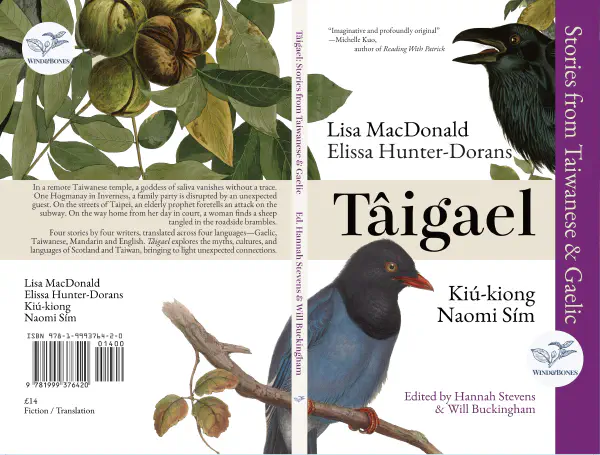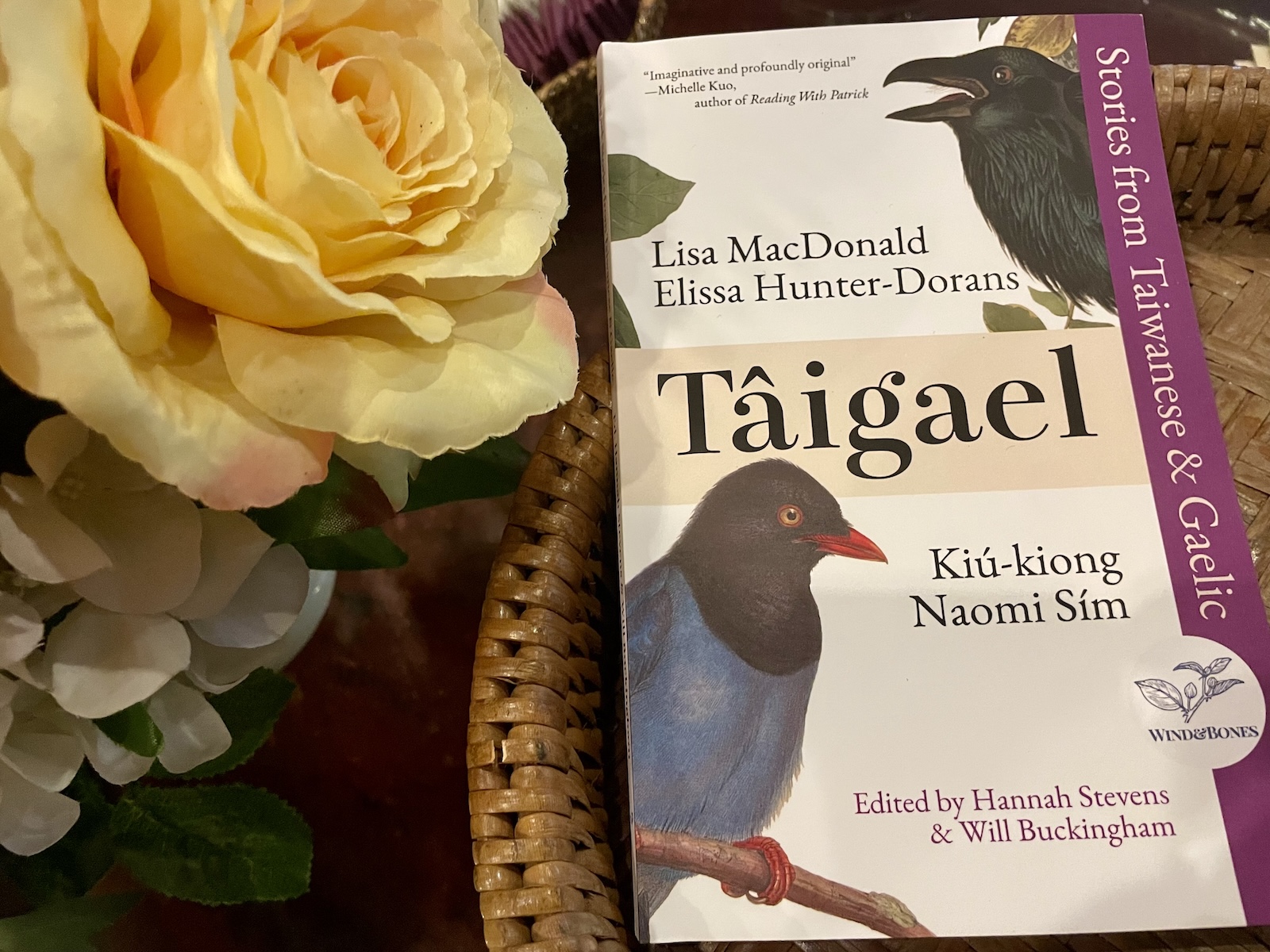
One of the things we were interested in, when we published our book Tâigael: Stories from Taiwanese & Gaelic, was the question of what happens when literature migrates across and between smaller languages. What happens, for example, when the gods and street prophets of Taiwan (in Naomi Sím and Kiú-kiong’s stories) find themselves speaking Gaelic, or when the landscapes and rituals of Scotland (in Elissa Hunter-Dorans and Lisa MacDonald’s stories) are transposed into Taiwanese? What new forms of ingenuity do we discover as we move between these contexts? What new possibilities for these languages come to light?
There’s often an assumption that smaller languages can only speak to local contexts. But we don’t believe that this is the case, and one of our aims in publishing Tâigael was to give these languages the same status as larger languages: to recognise that all languages can speak of all things, even if they do so in their own particular ways.
Glossika are a language-learning app headquartered here in Taiwan, and as a company, they are committed to supporting learners of small (and large) languages, including both Gaelic and Taiwanese—languages that they offer for free. It is the only platform in the world (we think) where you can learn Taiwanese via Gaelic, and vice versa. So we’re delighted to have published this article on the Glossika blog about our book, and about translating between these languages.