When we set up Wind&Bones as a non-profit organisation back in 2018, it was born out of our belief that writing matters, and that we all have the power to creatively change the world for the better.
Hannah had just finished her creative writing PhD at the University of Leicester and was finalising her collection of short stories In Their Absence, which was published in 2021 by Roman Books. Meanwhile, she was working in the UK voluntary sector, helping people access funding for community-based projects like reading groups, writing and art activities—projects that improved the fabric of local communities, and that really did save lives.
Meanwhile, Will had been writing for years, and was working on his tenth book. He had two decades of experience working in community-based creative writing projects, and had recently left his post as Reader (Associate Professor) in Writing and Creativity at De Montfort University to pursue more freelance projects.
We always knew that writing could be powerfully transformative. We had seen this transformation in our own lives, and in the lives of others with whom we had worked. When we first started to plan working together as Wind&Bones, we realised that we both saw writing in similar ways: as an art of communication, a way of strengthening human connections, a practice that helps us explore what really matters.
The first project we worked on as Wind&Bones was a collaboration with Leicester City of Refugee. We ran a series of writing workshops with refugees and asylum seekers in Leicester. The workshops were held in a draughty community hall, and we encouraged participants to share stories and poems in whatever language they liked. It was fun, it was a little chaotic, it was full of life, and it was often deeply moving. And this early work cemented our view that writing and storytelling can build community, connections and understanding.
From there, we broadened our geographical horizons. In the years since we started out, we have worked in Burma, Greece, Bulgaria, Scotland, Ireland, and Taiwan running community workshops, giving lectures in universities, and creating new projects that bring together writing, storytelling, social change, and philosophy. We’ve worked with countless brilliant writers and thinkers: survivors of abuse, people in search of refuge and safety, ex-political prisoners, doctors, journalists, LGBTQI+ groups, activists, and community educators from around the world.
This work has shown us first-hand how stories and the written word can inspire new connections, open up new pathways, and bring into being newly creative ways of reimagining the possibilities of human life—not only in the local communities and contexts but also across borders and across the globe.
After years of working with so many creative people, and being privileged to share in so many fascinating stories, in early 2025, we decided we wanted to use Wind&Bones as a way to share more of these stories.
So we rebranded to Wind&Bones Books, and started to work on developing our work in publishing. Wind&Bones Books is currently based between Scotland and Taiwan. We publish books we care about, including fiction, translation, philosophy and curious hybrid works. Our first book in this new phase, Tâigael: Stories from Taiwanese & Gaelic came out in June 2025. And we are excited by what we have in the works: new fiction, poetry in translation, and a host of other creative projects. We run as a micro-publisher, producing beautiful, necessary books that are exquisitely designed and typeset, and available in EPUB and print-on-demand paperback editions. You can find out about our growing range of books on books.windandbones.com.
Through our publishing—as with our previous work—we’re dedicated to exploring the points of intersection between writing, creativity and social change. We believe writing can and does change the world. Not once and for all, but in small ways and large, sometimes incrementally and at other times dramatically.
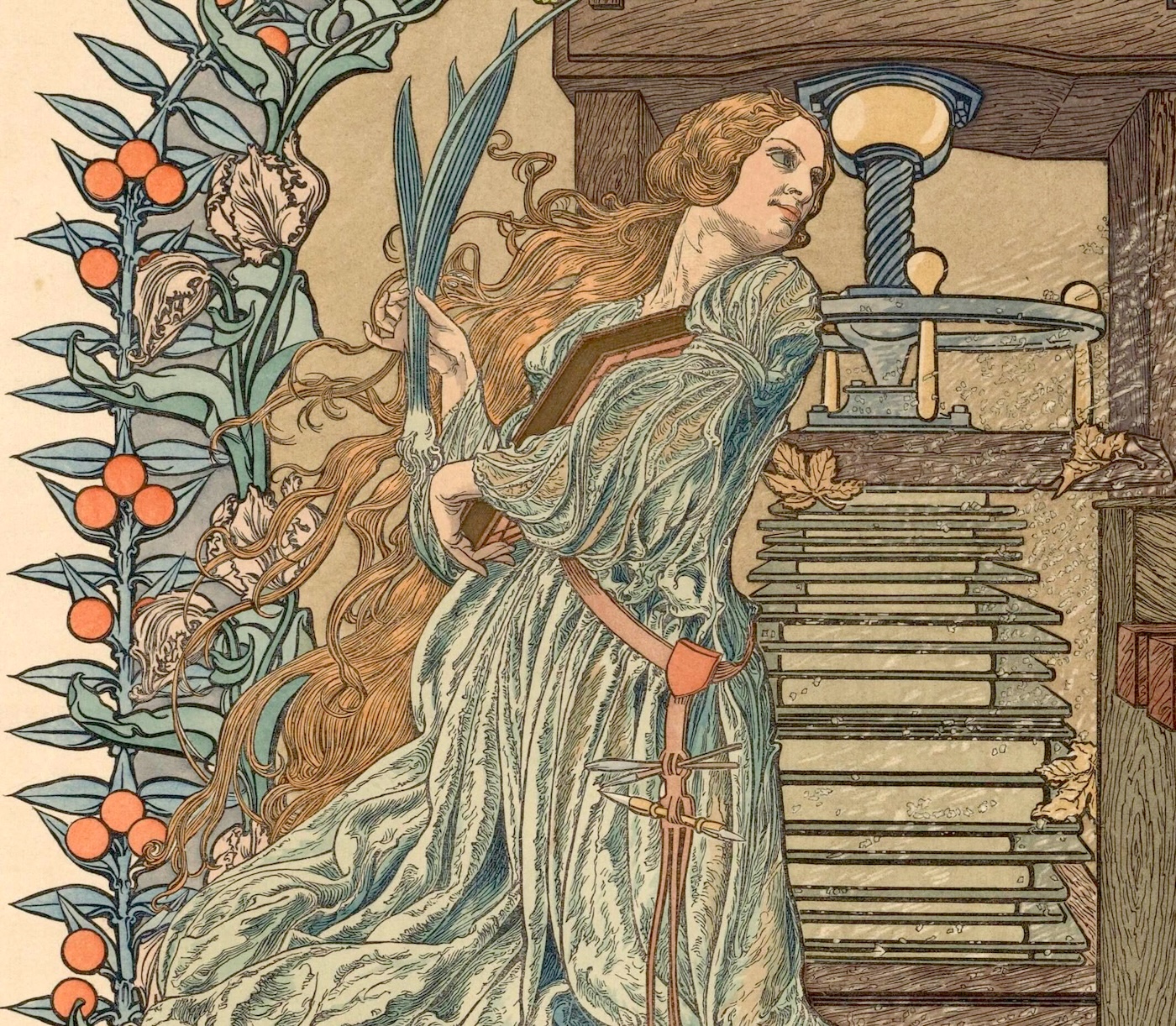
Image: Affiche voor de Cercle Grolier de Paris (1903). Public domain via Wikimedia Commons.


.jpg)
